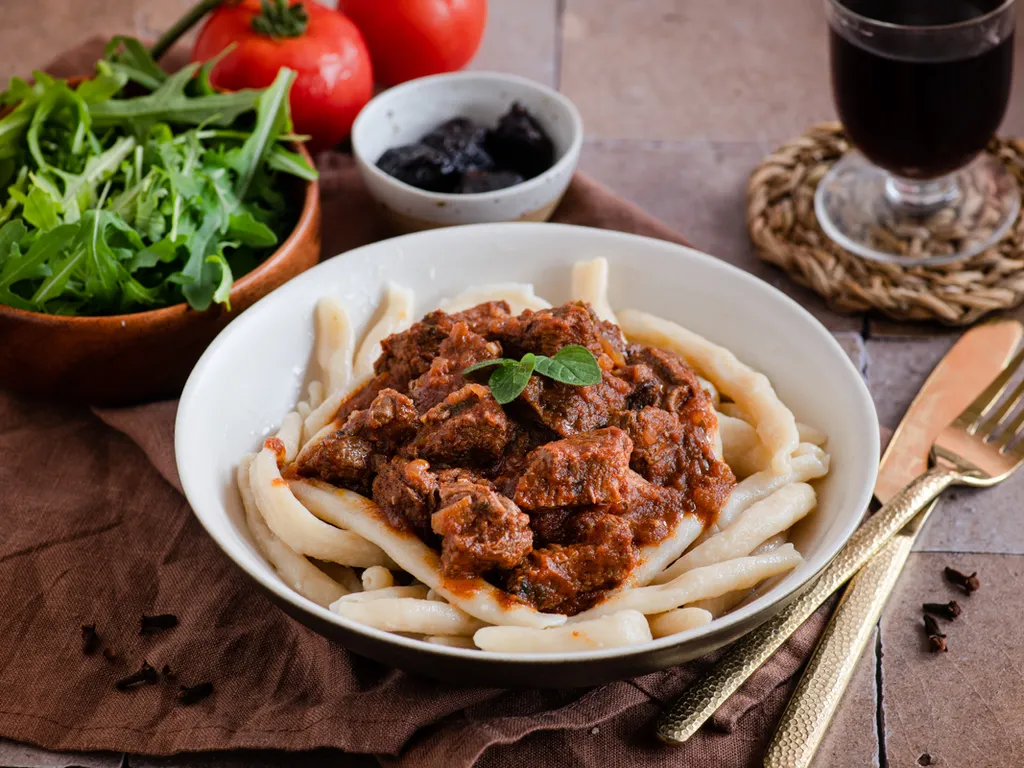
Blessed Saint Blaise Bread
Simple breads are blessed and shared in several Italian communities as part of Saint Blaise devotion.

Religious & cultural
Also known as San Biagio / Sveti Vlaho
A Christian feast honoring Saint Blaise, known for the traditional blessing of throats with crossed candles.
Saint Blaise's Feast Day honors Saint Blaise of Sebaste, a Christian bishop and martyr traditionally remembered as a protector against illnesses of the throat.
The observance is especially associated with the blessing of throats, usually with two candles held in the shape of a cross. In some communities, the feast also includes processions, special foods, folk costumes, and gatherings of families and parish communities.
Protection of the throat — Saint Blaise is traditionally invoked because of the story that he healed a child who was choking on a fish bone.
Faith and healing — The throat blessing expresses a prayer for protection from illnesses of the throat and from other ailments.
Memory of a martyr — The feast also commemorates Blaise as a bishop and martyr whose witness became part of Christian devotion.
Saint Blaise is traditionally identified as a bishop of Sebaste in ancient Armenia and is associated with the early Christian period. Accounts of his life combine historical memory with later devotional traditions, including stories of healing, life in a cave, and martyrdom.
Devotion to Saint Blaise spread widely through Europe during the Middle Ages. The blessing of throats became one of the best-known customs connected with his feast, while individual communities developed their own processions, foods, and local celebrations.