Dhuska
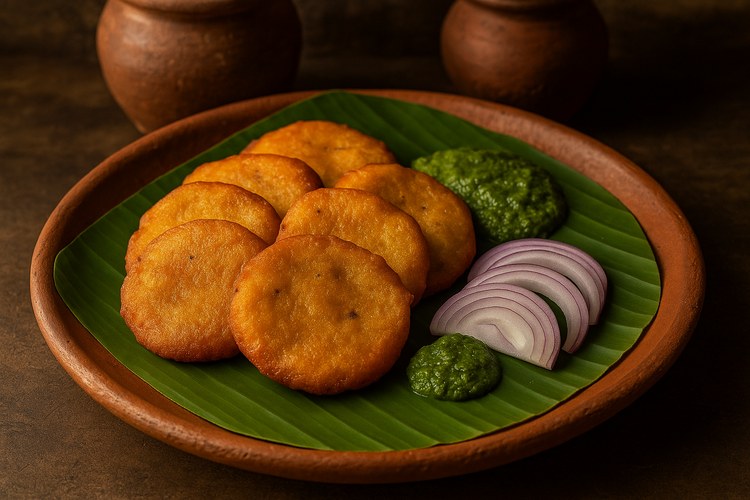
A crisp rice-and-lentil preparation from Jharkhand, commonly served with a vegetable curry or chutney during festive gatherings.

Harvest & cultural
Also known as Karma Parab / Karma Puja
A harvest festival honouring the Karam tree, community life, nature and hopes for prosperity.
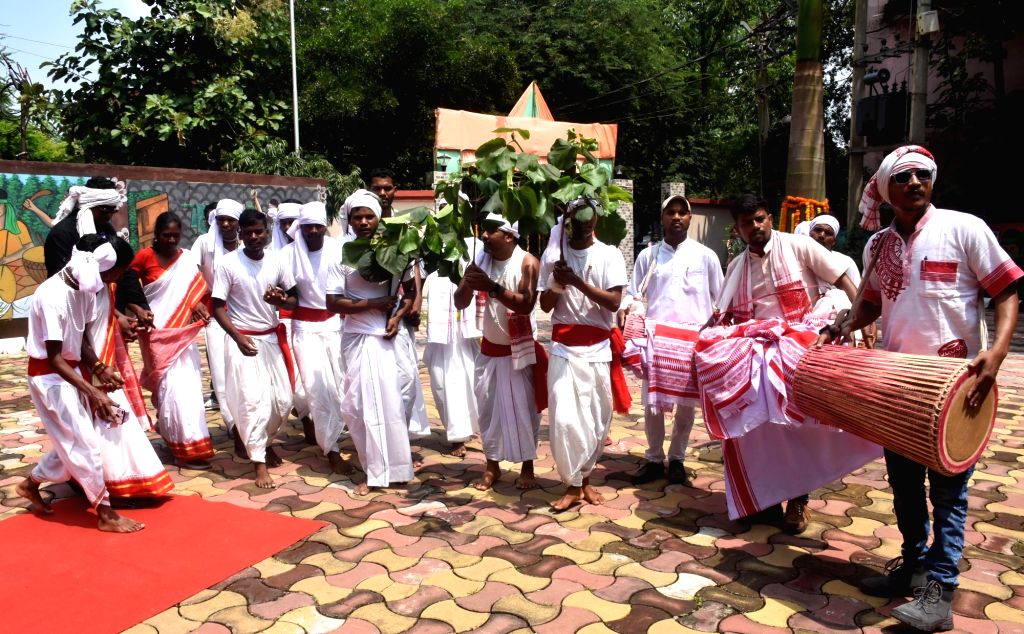
Karam is a harvest and nature-centred festival observed by several Adivasi communities of eastern and central India. The celebration takes its name from the Karam tree, whose branch becomes the focus of worship, songs and communal dance.
The festival brings together agricultural symbolism, youth participation, family relationships and community life. Practices differ between communities, but the shared emphasis is on nature, wellbeing, prosperity and the seasonal cycle.
Nature and harvest — The Karam tree represents the close relationship between people, forests and agricultural life. Rituals express hopes for healthy crops, fertility and prosperity.
Strength and wellbeing — Karam Devta is associated in local traditions with strength, youth, vitality and good fortune.
Family and community — In several traditions, fasting and prayers are connected with the wellbeing and longevity of siblings, while the shared songs and dances reinforce community bonds.
Karma and conduct — Stories of the brothers Karma and Dharma are told in some communities, linking respect for nature and right conduct with the wellbeing of the household and community.
Karam developed within the agrarian and forest-based cultural traditions of Adivasi communities across the Chota Nagpur Plateau and neighbouring regions. Its rituals reflect seasonal agriculture, the importance of trees and the social role of village gathering places.
The festival has continued across generations through oral traditions, songs, dances and community rituals. As communities have moved between rural and urban settings, Karam celebrations have also appeared in towns and cities while retaining the central symbolism of the Karam branch.